
Les Rencontres d’Arles - 2026 Edition
You probably don’t know this but Les rencontres de la photographie d’Arles, the Rencontres for short, is one of the world’s largest and oldest photography festivals. Started in 1970 by Lucien Clergue, one of my main inspirations in photography, together with Michel Tournier and Jean-Maurice Rouquette, it grew out to become one of the world’s most important annual gatherings for the medium.
Not only does it host tens of official exhibitions, the festival inspires many independent photographers to host their own exhibition alongside the festival’s official programme. In addition, photography brands and auction houses set up shop to showcase their products and offer exhibition space and workshops as well.
Although the festival lasts for three months, the opening week is when most independent photographers have their shows as well, creating a vibrant atmosphere with multiple exhibition openings every day. The town center where most exhibitions are located is mostly pedestrian. Add the great weather, the beautiful surroundings once you go outside of town and the good food, all ingredients are there for a photographer’s heaven.
What makes the festival truly special, and it’s name already gives it away, are the encounters. You meet people everywhere, photographers of course, but also gallerists, locals, people specialized in paper and printing techniques, models, journalists. It’s a great place to get inspired and make new connections.
Since I discovered the festival in 2017, I’ve tried to go each year and even joined the unofficial programme in 2019 with two exhibitions (Black Holes and Istanbul street work). I managed to block a few days and go to the 2026 edition. Unfortunately not enough time to see everything, not sure if that’s even possible, but I managed to see some great work, run into old colleagues from the Fotoacademie Amsterdam and Spéos Paris. I also made some appointments to follow-up on in September.
A few of my highlights:
Harry Gruyaert – A sense of place – Chapelle Saint-Martin du Méjan
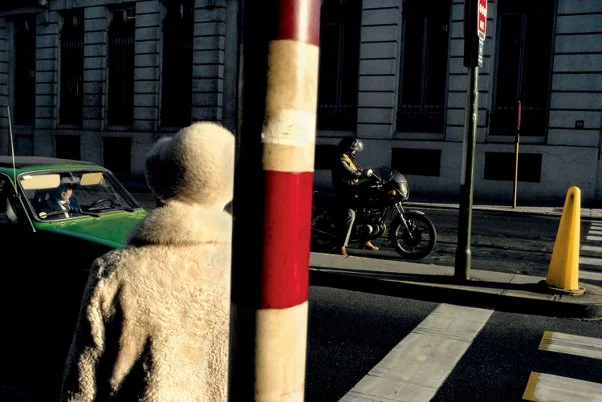
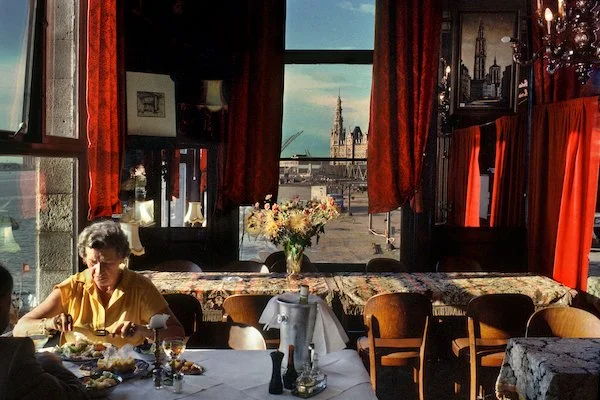
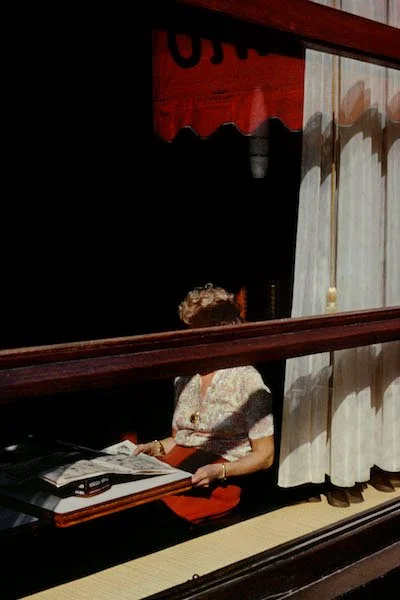
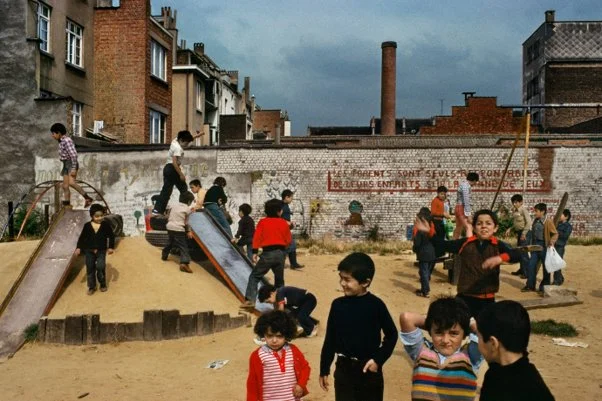
A Belgian street photographer, born in 1941, with remarkable colour photographs from his travels all over the world. His street scenes look like modernist colour patchworks, reminiscent of Saul Leiter and of course William Eggleston.
In his photographs, the people are often relegated to- or perhaps even turned into the background. As if it weren’t these same people that created the environment they find themselves in but almost happened to be there by accident.
It creates a very strong perspective if you look at his work from today’s angle. To me it poses the question of how much as a species we control our destiny. Much of his work was taken in the previous century and you can feel, especially with all the forest fires raging all over Southern France while I indulge myself in this colourful extravaganza, that the world he captured no longer exists, but inevitably led to the one we’re in today.
Fnac’s photography collection – Espace Monoprix
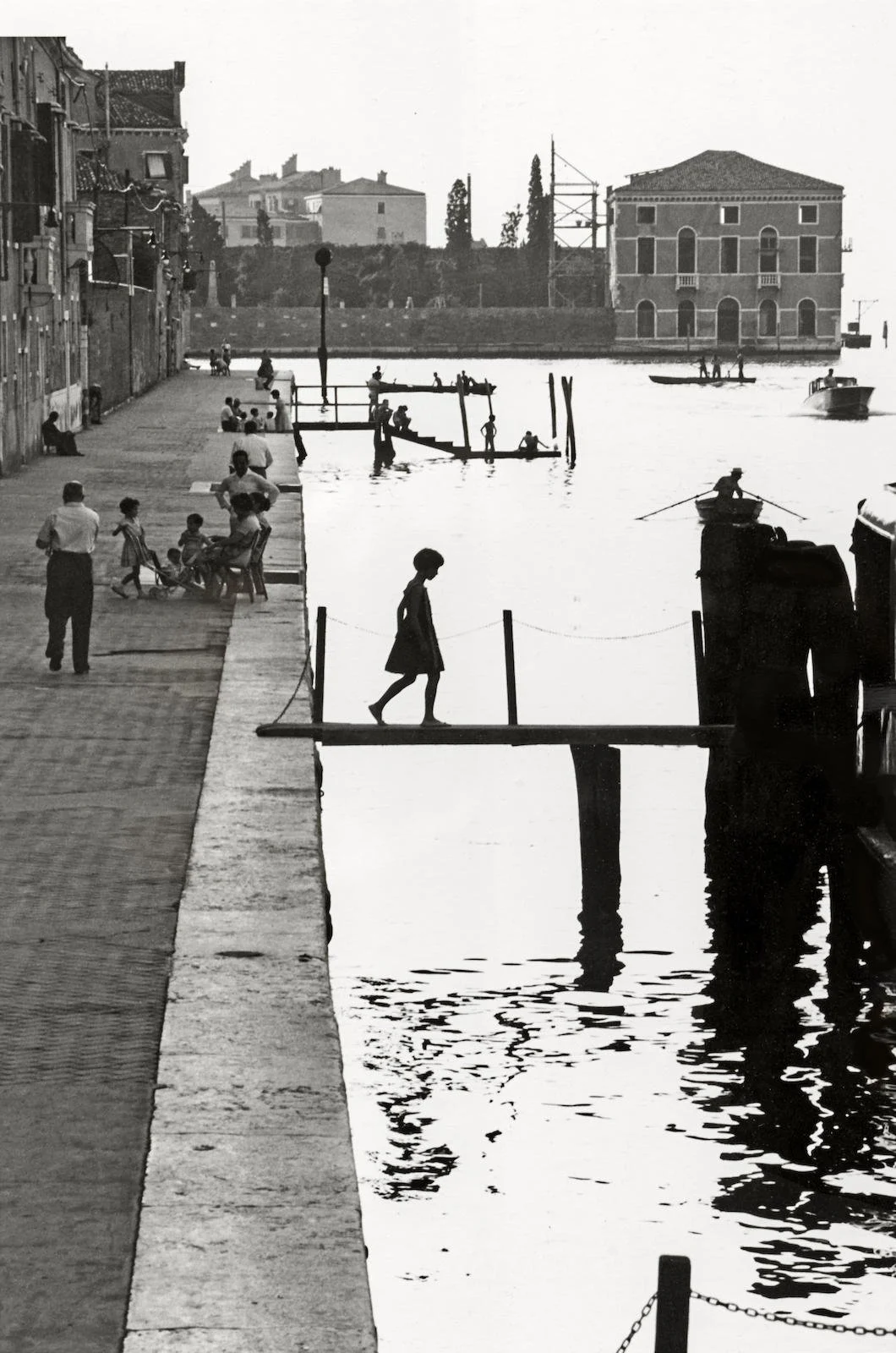
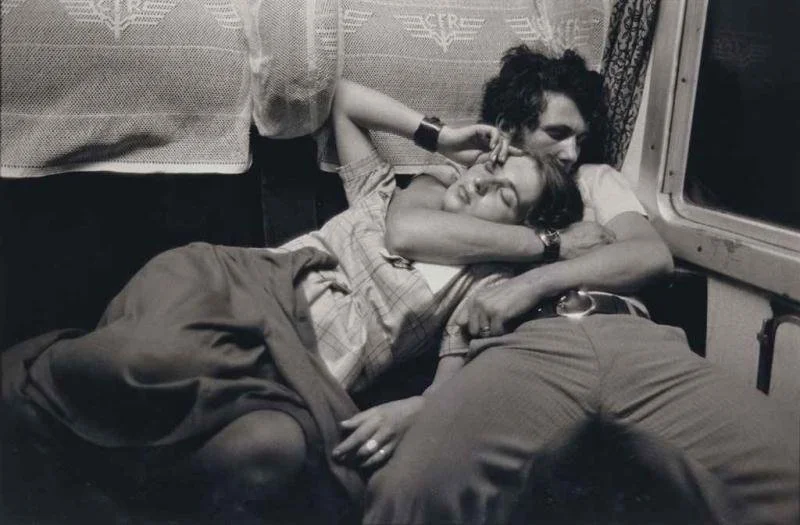
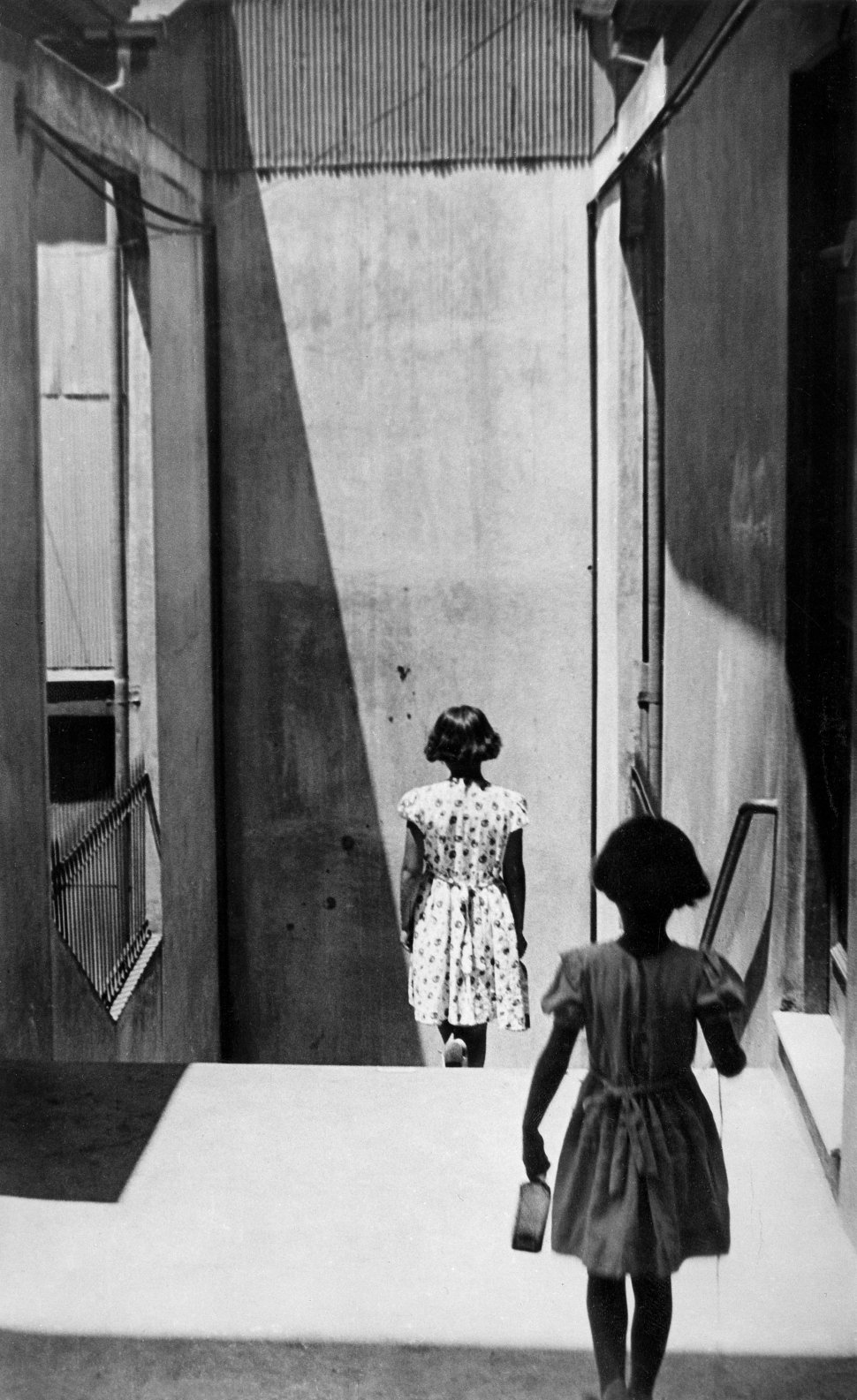
Very different and perhaps even antagonistic to Harry Gruyaert is the Fnac collection, on show in a large space above a supermarket. It is no secret that I’m a big fan of classical humanist photography and here we find plenty of it. From Henri Cartier-Bresson and Koudelka to Boubat, Larrain and dozens more. A rather incredible selection of amazing photographs that you will not easily find grouped together like this. It felt like one of those once in a lifetime opportunities.
The exhibition is accompanied by texts from Natacha Appanah, writer and Prix Femina winner in 2025. A beautiful and inspiring addition to the photographs. The following phrase stuck with me and I’ll share it with you here as it’s thematic closely relates to my current work in progress Memories:
“Now, years later, he had rediscovered that gentleness that had made him a luminous child. I did not know that you could reconnect with the characteristics of your childhood, like reclaiming your innocence.”
Lee Shulman and Omar Victor Diop with The Anonymous Project - Being There
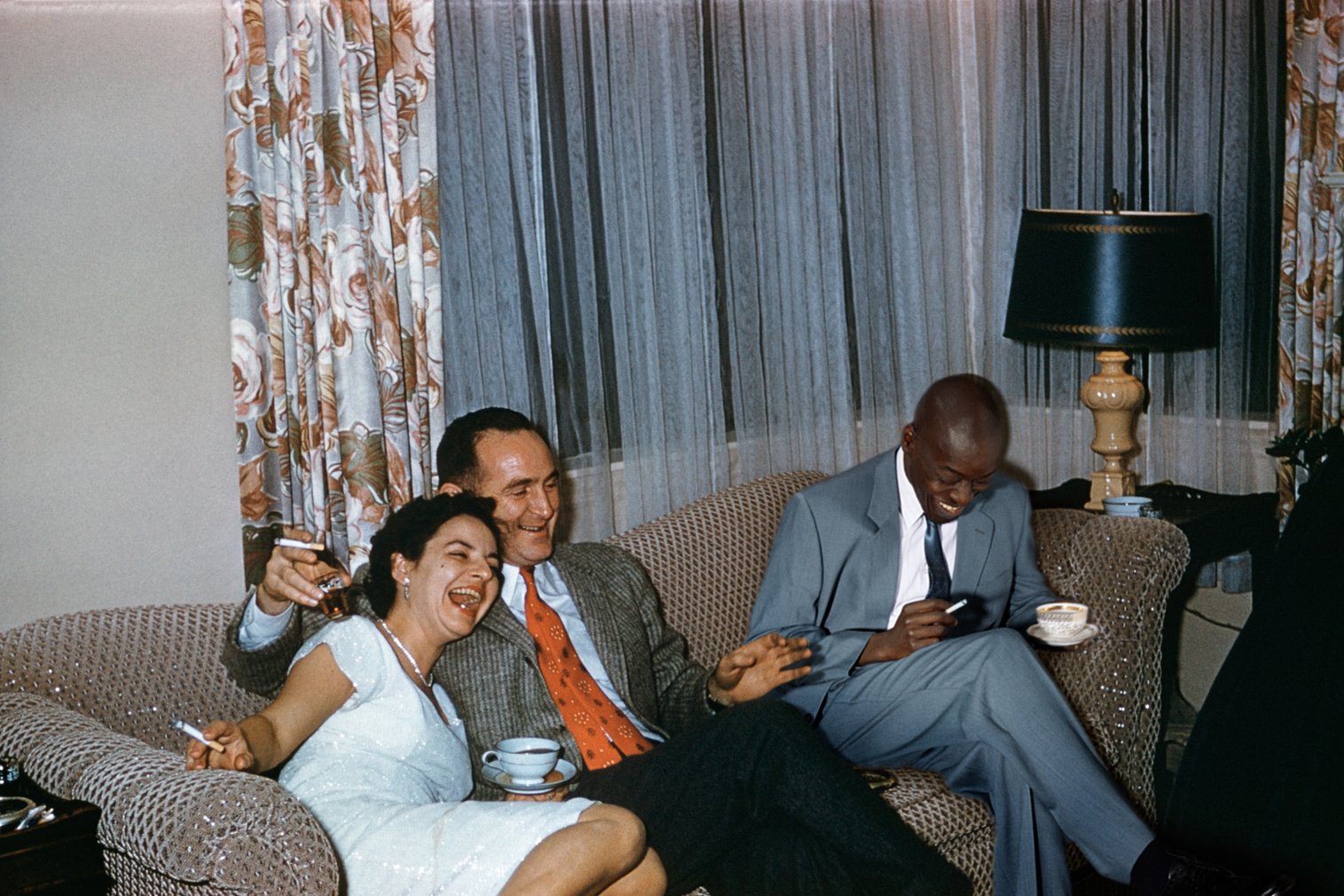
Shulman collects colour slides from the last 70 years. With Diop he inserts a person of colour into everyday American scenes we all know so well. The suburbs, the holidays, the parties. The inclusion of Diop in the images is poignant, it feels completely normal at first sight, until you realize that people of colour were excluded from such scenes at the time the pictures were taken.
A beautifully executed project and I would recommend the book that can be bought here.
Magali Paulin – Matières, fantômes – Espace Monoprix
A series I loved for multiple reasons. First of all, the visuals are calm with their almost subdued grey tones. A soft contrast that creates space to breathe and reflect. The absence of judgement in the images contributes to that as well. This space is much needed because the topic addressed through these photographs is both heavy and urgent.
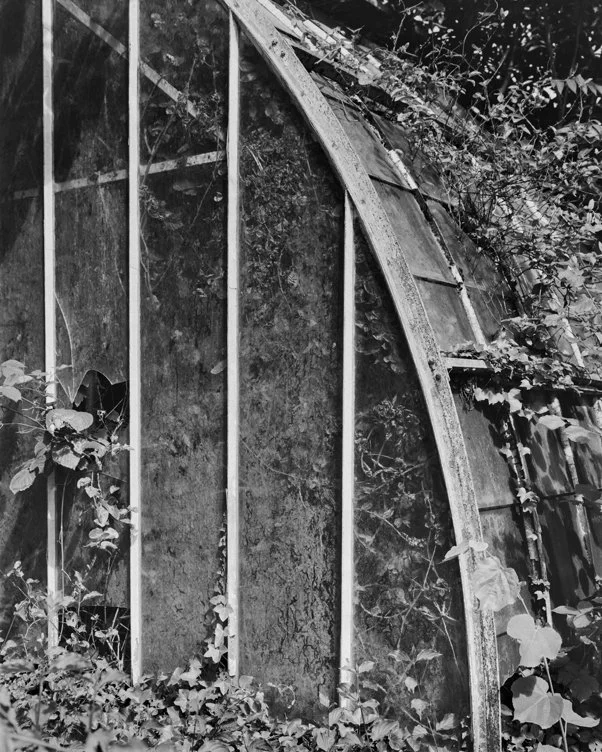
Magali Paulin
What we see are the remnants of an exhibition that took place close to Paris in 1907 in the Jardin d’agronomie tropicale René-Dumont. It celebrated colonialism and included indigenous villages, which are more like human zoos. The site is derelict and the buildings and statues are weathered and overgrown with vegetation. Colonial history is one colonizing countries still have difficulty to face. The history though exists as void filling a space. As Paulin puts it poignantly “a memory neither acknowledged nor erased.” More information : https://magalipaulin.com/Matieres-Fantomes.
Marilyn Clark - L’éveil sauvage
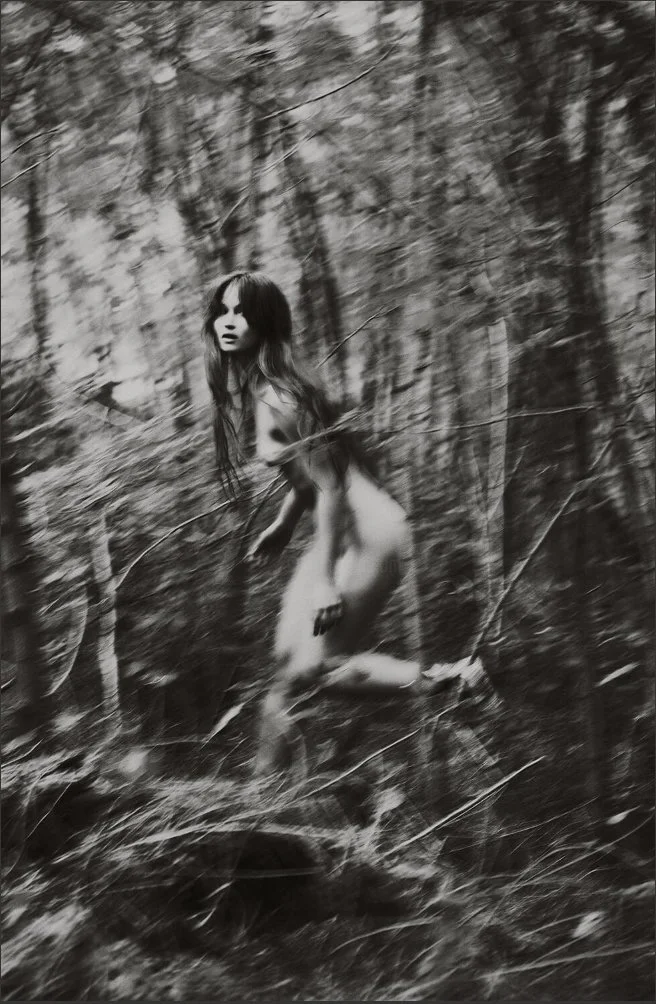
One of my favorite exhibitions in the unofficial programme was Marylin Clark’s show. A small yet spacious gallery she shared with a fellow artist Gerald Portenart. The image that drew me in was a life-size print of a woman running through a forest, visible through one of the gallery’s windows as I passed by. A very poetic, mysterious and well executed series, beautifully printed and framed. And, it must be said, one of the very few exhibitions that featured artistic nudes. The exhibition in Arles has closed but has since moved on to the Chateau de Campuget and can be visited until early October.
Adrien Vautier – Si tu traverses l’hiver – Eglise Saint Julien
I will finish this review with a final exhibition on the Russian invasion of Ukraine. In our society we’re being flooded by images of war and violence and as a result, end up saturated and not really seeing the pain. The photographs of Vautier manage to make you stop, look and feel despite these being quite brutal at times. I created a small video impression of the exhibition.
You still have a few months to visit the festival and even though most of the independent entrepreneurial creatives will have left by now and the ambiance might not be as festive, the official programme is still very much worth a look.
The opening week of the festival is always exciting with so much to see and so many new and old people to meet. There is a lot more to say about the festival, the smaller exhibitions I saw, particularities we see when comparing photography from different regions for example, new ways of looking and using images as a medium to convey stories and messages. I haven’t even discussed my visit to the Fondation Manuel Rivera-Ortiz yet, a bee-hive on multiple floors buzzing with young people, or the Galerie Anne Clergue, the daughter of Lucien Clergue I mentioned at the start of this text.
At the end of each day, I leave through the Roman city gates at the North side of town. As I drive out I reach the first widen open fields at the end of the city. On the horizon a light grey veil that hints at the many ongoing forest fires that have already scorched record areas in France this year. The roads that carry me further away from the buzz are covered in shadow plays cast by the plane trees in the setting sun. Warm air blows across my face through the open windows. The powerful light bangs off the bark of the trees, making them glow with white-flecked highlights.
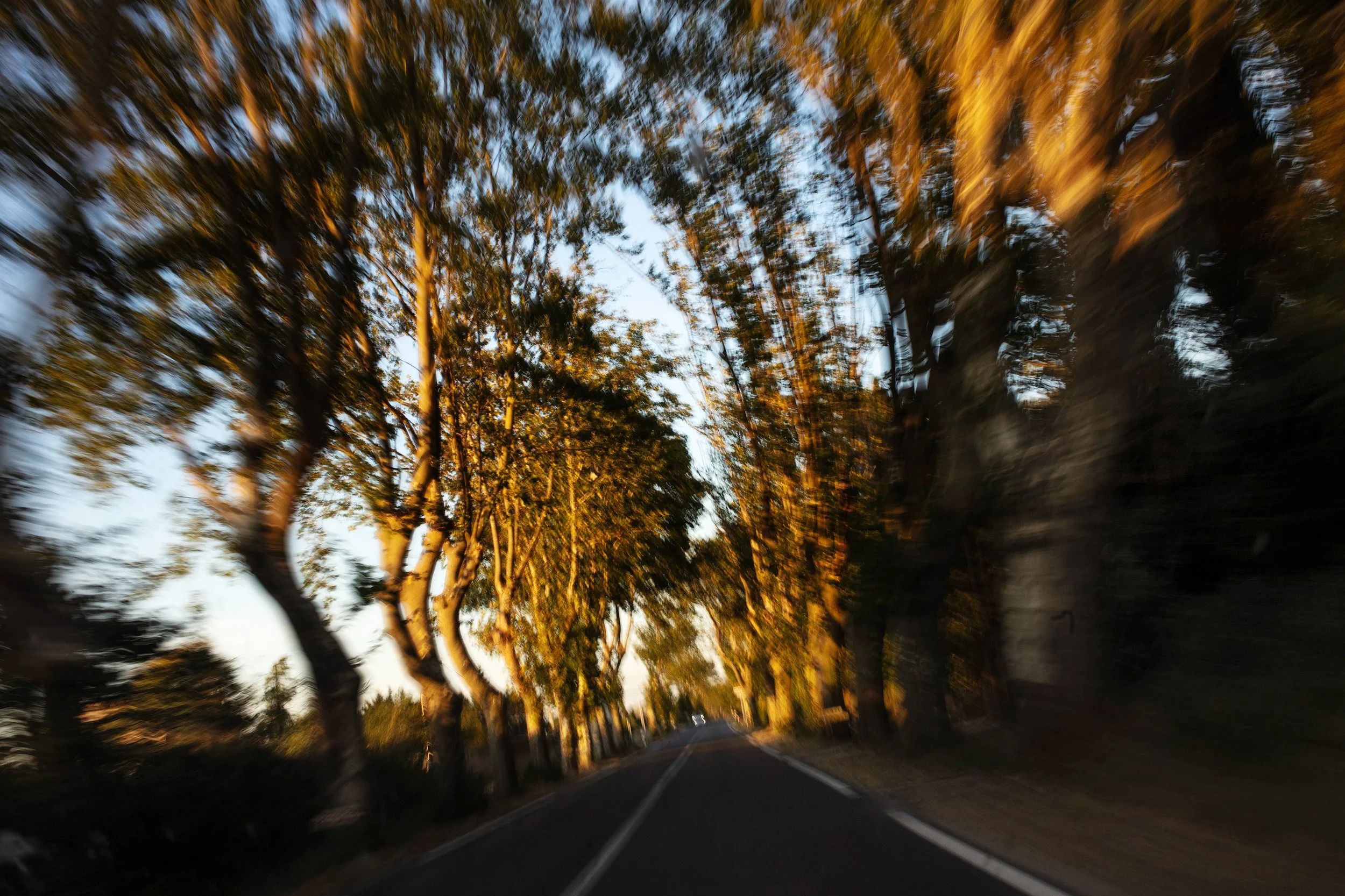
I hear the gravel shifting beneath my tires as I park the car. The scent of pine trees fills the vehicle. A turtle dove coos. The crickets chirp on tirelessly as the light grows ever warmer and slowly ebbs away. This is not the end of a day that announces tomorrow but that quietly whispers the imminent collapse of our stability is another step closer.
I realize that while a few exhibitions do engage with ecological themes, the festival’s dominant narratives revolve around migration, war, and identity. My take-away is that climate change, despite its urgency, remains a peripheral concern, which is all the more astounding with the consecutive heat waves hitting the country and the all the fires that keep igniting. Perhaps it’s time to present my work again during next year’s edition.